Physical Therapist
One of the things I enjoy most about teaching Aikido is that a simple question about technique often leads to a much deeper discussion.
Recently, during class, a student asked a question that every serious martial artist eventually asks:
“With so many teachers, styles, and interpretations… how do we know what’s right?”
It is an honest question.
Throughout our training we encounter different instructors, organizations, and expressions of the same techniques. Some differences are subtle. Others appear significant. It is only natural to wonder which version is correct.
Whenever we train, regardless of who is teaching, it is important to observe the details. Watch not only
what the instructor is doing, but how they are doing it. Reproduce that version as faithfully as you can,
even when it doesn’t immediately feel natural. Ask questions. Experiment. Stay curious.
One of the qualities that separates good martial artists from great ones is the discipline to notice and
appreciate the small details and nuances that are so easily overlooked.
At some point, however, every serious student encounters the same question:
“Sensei A does it this way. Sensei B does it another way. How do I know what’s right?”
It is a fair question—and one that nearly every martial artist asks themselves throughout their training. The
temptation is to begin comparing versions in search of the “right” way. But genuine understanding rarely
begins that way.
Instead, train deeply within one path long enough to understand not only how it is done, but why it is done
that way. Only then are we truly prepared to recognize and appreciate the many valid expressions of the
same underlying principles.
With that understanding, other interpretations become illuminating rather than confusing. They broaden
and deepen our understanding.
Over the years, we are naturally influenced by many instructors, training partners, and experiences. Each
contributes something valuable to our understanding and helps refine our practice. Yet those influences do
not replace our foundation—they build upon it.
Like the roots of a healthy tree, a strong foundation provides the stability that allows us to grow in many
directions without losing our connection to what first gave us strength.
At the same time, our ultimate goal is not to become a copy of our instructor.
I have been fortunate to learn from many outstanding teachers throughout my journey. Each has influenced my understanding in meaningful ways.
Yet whenever I find myself searching for clarity, I return to the principles and foundation instilled by my own teacher, Akira Tohei Sensei.
It is from those roots that everything else continues to grow.
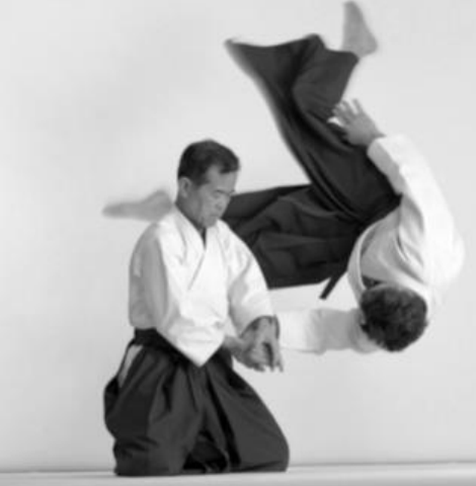
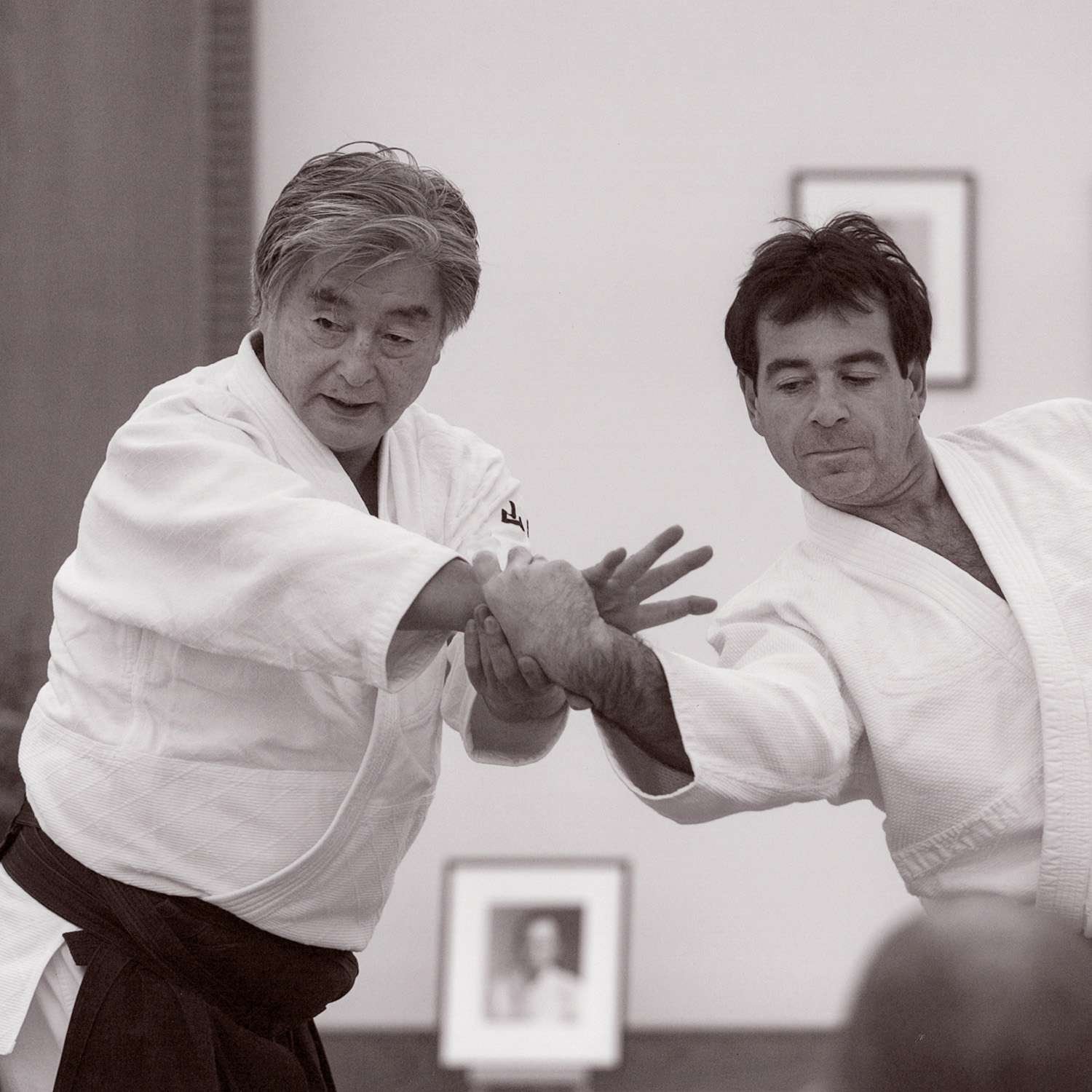
Akira Tohei Shihan, 8th Dan (1929-1999)
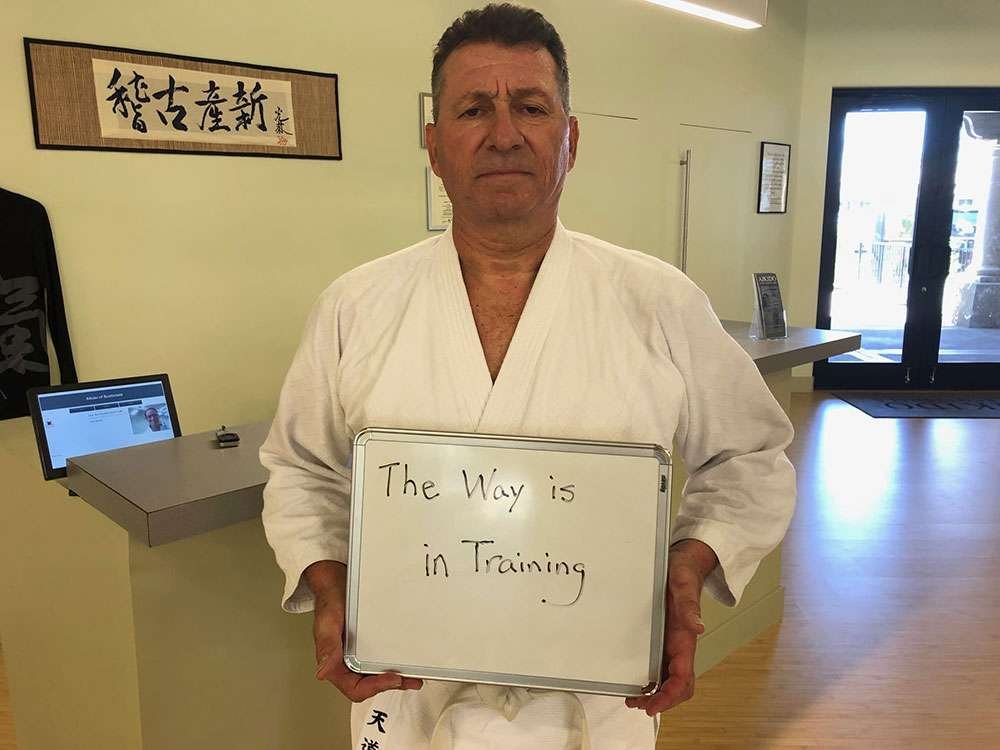
Many of our students have heard me speak about the phrase Keiko San Shin, the scroll hanging on the wall above the front desk of our dojo.
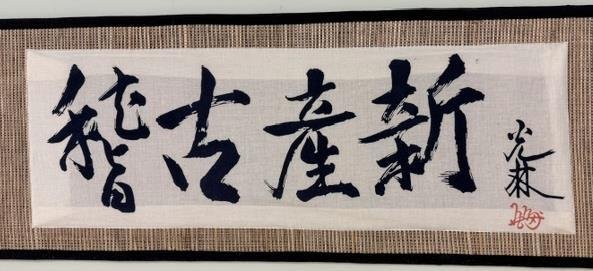
It was a principle my teacher spoke about often, and over the years I have come to realize that it answers many of the questions students ask about training.
Keiko reminds us to faithfully study and preserve what has been handed down through generations. San Shin reminds us that those teachings are not meant to remain static. Through years of sincere practice, they gradually become an authentic expression of ourselves—not because we are trying to be different, but because genuine understanding naturally finds its own expression.
In the beginning, we imitate—not to become someone else, but to understand the principles that give technique its structure and meaning. We begin by studying the outward form. Over time, however, our attention shifts beyond appearance as we begin to understand not only how a technique is performed, but why it is performed that way.
Eventually, we are no longer trying to look exactly like our teacher. Instead, our technique becomes an authentic reflection of our own understanding.
That does not mean creating a “new” Aikido or changing the art simply for the sake of being different. While the outward expression of technique may naturally evolve, the principles that give it structure, integrity, and effectiveness remain constant.
For my teacher, Akira Tohei Sensei, those principles were never abstract. He continually reminded us that every technique should embody what he simply referred to as “2 Lines, Same Way, Safety Zone”—moving off the line of attack, blending and moving in the same direction as our partner, and remaining in a position of safety. Those principles remained constant—the roots from which authentic expression could naturally grow.
As my teacher often reminded us, this cannot be forced. It cannot be rushed, manufactured, or consciously created. It develops quietly and organically through years of dedicated practice until it simply becomes…
Normal.
Years ago, I asked my teacher a question that had been on my mind for a long time.
“As much as I feel I’m improving—and as much as you understand after all these years—how much better can technique become? What should it feel like? What are we really searching for?”
I waited, expecting a profound answer.
He quietly took another puff of his cigarette, thought for a moment, and simply replied, “Normal.”
I remember thinking, “That’s it?”
He smiled and explained, “Normal breathing. Normal feeling.”
That simple answer has stayed with me ever since. I often share it with my own students, and I continue trying to embody it in my own training.
True mastery does not feel extraordinary. It feels natural. Unforced. Effortless. Like breathing. Perhaps that is what we are really searching for all along.
A strong foundation doesn’t limit our growth—it makes it possible. We honor our roots, learn from many branches, and, over time, discover an authentic expression of our own understanding.
The journey never ends…
Time to bow in.
Dedicated with gratitude to my teacher, Akira Tohei Sensei,
whose teachings and example continue to guide me…
and to the students of North Shore Aikido,
whose dedication continues to inspire me.
Glenn Brooks, 7th Dan, Shihan
Chief Instructor
North Shore Aikido